Showing posts with label frack ban. Show all posts

Monday, June 29, 2015

DEC says NO Fracking


It's true. New York is officially banning hydrofracking from the state.

This afternoon the NYS Department of Environmental Conservation released its official Findings Statement concluding the seven-year environmental impact study on high-volume horizontal hydraulic fracturing.

In remarks to the press, DEC Commissioner Joe Martens said, "After years of exhaustive research and examination of the science and facts, prohibiting high-volume hydraulic fracturing is the only reasonable alternative.” Fracking, he said, "poses significant adverse impacts to land, air, water, natural resources and potential significant public health impacts that cannot be adequately mitigated."

Significant adverse impacts to land, air, water, natural resources and potential significant public health impacts that cannot be adequately mitigated.

The finding, says Martens, is "consistent with DEC’s mission to conserve, improve and protect our state’s natural resources, and to enhance the health, safety and welfare of the people of the state." 

There are no "feasible or prudent alternatives" that adequately avoid or minimize adverse environmental impacts, he notes. Likewise, there are no "feasible or prudent alternatives" that address risks to public health from fracking.

DEC based the Findings Statement on the huge amount of research included in the Final Supplemental Generic Environmental Impact Statement (FSGEIS) that they released last month. That 2,000-page document included responses to public comments and the state Department of Health’s Public Health Review, which concluded that, given the uncertainty regarding potential health impacts from high volume hydro-fracking, that technology should not move forward in the state.

The 44-page Findings Statement details widespread potential impacts from fracking including impacts to water and air resources, ecosystems and wildlife, community character and public health.You can read it online at the DEC's website.


Tuesday, May 26, 2015

Wading into the final SGEIS

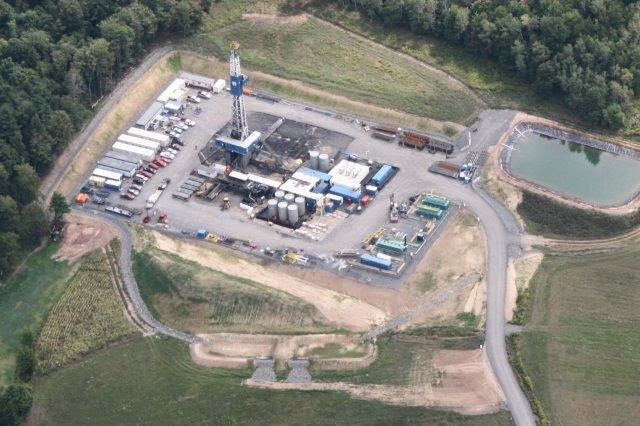
active Marcellus well, Bradford County, PA


Nearly two weeks ago, the NY State Department of Environmental Conservation (DEC) released their Final SGEIS. Weighing in at 2,000 pages – about 20 pounds – this report lays the groundwork for what many believe will be a statewide ban on high volume hydraulic fracturing.

The SGEIS (Supplemental Generic Environmental Impact Statement) on high-volume horizontal hydraulic fracturing supplements the existing environmental impact statement for oil, gas, and solution mining that was adopted in 1992. The original scoping document called for an SGEIS to address just a handful of issues that hydraulic fracturing would present including increased water use for drilling and the impacts of multiple wells at a single well pad.

Over the years the document grew as its scope expanded. Now, with the completion of the SGEIS, there is just one more official step in meeting the State’s Environmental Quality Review Act (SEQRA): issue a formal “findings statement”. The “findings statement” is legally binding and cannot be issued any sooner than 10 days after the release of the Final SGEIS.

What’s different about the Final SGEIS, besides its heft, is the amount of effort that DEC put in to gather comments from medical and public health professionals, environmental organizations, municipalities, industry groups, and other members of the public; the review of the state Department of Health report; and a review drilling incidents in Pennsylvania. 

Here’s what you’ll find when you crack open its covers:

In chapter two, DEC notes that, if allowed, hydro-fracking would impact areas not previously exposed to oil and gas development. Furthermore, ancillary activities associated with drilling activities “would likely spread to those areas of the state where high-volume hydraulic fracturing is prohibited.”

Chapter six focuses on environmental impacts. DEC acknowledges uncertainty about the effectiveness of mitigation; the inability to quantify potential risks and impacts to environment and public health; and that some significant adverse impacts simply can’t be avoided.  They list potential impacts on water resources, ecosystems, wildlife, air resources, local communities, local economies, and transportation. DEC also brings up additional concerns about radioactive materials that are released during drilling and the potential for man-made earthquakes. When considering drilling’s impact on greenhouse gases, DEC cites New York’s long-term policies aimed at reducing greenhouse gas emissions through a reduction – not an increase – in reliance on fossil fuels.

Despite the weaknesses inherent in mitigating potential harm from intensive industrialized drilling, DEC outlines seven possible measures. These steps include prohibiting hydro-fracking in the New York City and Syracuse watersheds, fracking within a 500-foot buffer area above primary aquifers, and mandatory disclosure of ingredients in fracking fluids. The DEC specifically points to the lack of evidence showing that high-volume hydro-fracking can be done “without posing unreasonable risk to human health.”

At the end of the process, DEC Commissioner Joseph Martens must file a findings statement that describes how the state moves forward. The Final SGEIS provides three alternatives: no action, a phased-permitting approach, or allowing green and non-chemical fracking technologies and additives. Many think it’s likely that Martens will choose the “no action alternative”, especially given Cuomo’s statement in December calling for a ban. Under the “no action” alternative, DEC would deny applications for hydro-fracking that uses more than 300,000 gallons of water. High-volume hydraulic fracturing, which uses 5 – 7 million gallons of water per well, would not be allowed.

Thursday, May 2, 2013

NY Appeals Court: Towns CAN Ban Fracking


NY towns can ban hydro-fracking and shale gas drilling within their municipal borders – that’s the decision handed down from the state Appellate Division today. Pro-drilling landowners in the towns of Dryden (Tompkins County) and Middlefield (Otsego County) had sued the towns in an attempt to get drilling bans overturned. When they lost their suit in the lower court (the state Supreme Court) they appealed.

Today’s decision, from the Appellate Division, Third Judicial Department upholds last year’s decision and clarifies that, although NY environmental law gives all regulatory oversight of drilling to the state, it does not curtail a town’s ability to use land-use laws to protect the town’s interests.

In the decision for the Dryden case, the justices find that municipal zoning ordinances that ban drilling do not conflict with the policies or intent of the Oil, Gas and Solutions Mining Law. In their conclusion they state that the “…policy of the OGSML explicitly seeks to protect the rights of ‘all persons including landowners and the general public’ – not just the owners of oil and gas properties”… and that this goal is realized when “… individual municipalities can determine whether drilling activities are appropriate for their respective communities.”

Thus, writes Justice Peters for the court, “we hold that the OGSML does not preempt, either expressly or impliedly, a municipality's power to enact a local zoning ordinance banning all activities related to the exploration for, and the production or storage of, natural gas and petroleum within its borders.”

They upheld that same decision for the Middlefield case.

Wednesday, March 20, 2013

3rd NY Town Wins in Court over Frack Ban

Last week acting Supreme Court justice Robert Wiggins (Livingston County, NY) ruled in favor of the Town of Avon's fracking ban.  He cited Court of Appeals precedents and decisions in favor of local bans in the towns of Dryden and Middlefield. This makes the third NY town to win in a court case challenging a town's right to ban fracking.

Gas drilling company Lenape Resources sued the Town of Avon and the state Department of Environmental Conservation over the town's moratorium on drilling, saying the action threatened to put it out of business after having operated in the town for decades. Owner John Holko asked for $50 million in damages, and said he'd included DEC in the lawsuit because he felt the agency has a duty to stop towns from enacting local bans.

You can read more here.
Read the court decision at  http://www.scribd.com/doc/131442865/Avon-HOME-RULE-Decision

Saturday, February 23, 2013

Frack Ban and Petition Shenanigans in Colorado

On Tuesday, February 19 the Fort Collins (Colorado) City Council voted 5 - 2 to give initial approval to an ordinance that would prohibit all oil and gas exploration activity within city limits. The final vote will take place March 5. But in the intervening days, they've got a lot to discuss.

For instance: who really signed the petition that supposedly came from business owners in favor of fracking within town limits? Because Cali Rastrelli, who used to work at Big Bill Pizza, has no idea how his name got on the petition headed "Vote NO on the Fort Collins Frack Ban". He sure didn't put it there - and the pizza joint, located an hour and a half south of Fort Collins, has no stake in the matter. And to top it off, whoever signed his name spelled it wrong.

Rastrelli's not the only one;  22 of the 55 business owners who supposedly signed onto the Colorado Oil and Gas Association (COGA) -sponsored pro-fracking petition told the local press that they were mistakenly included. Either someone signed their name, or they didn't know what the petition was for. And, in some cases, the business owners were against drilling and fracking within the city - boy, weren't they surprised to see their names on the list.

Friday, February 24, 2012

Another Judge Upholds Second Town Ban on Fracking

For the second time in a week a NY Supreme court judge has determined that a town does have the right to ban fracking using zoning and land use law. This afternoon Justice Donald F. Cerio upheld the town of Middlefield, NY (Otsego County) ban on fracking within town boundaries.The town board passed the new zoning law at the end of June, 2011.

In September, dairy farmer and town resident Jennifer Huntington initiated a lawsuit against the town claiming that the new law is illegal and infringes on her private property rights to allow gas drilling on her land.


Judge Cerio disagrees. While the state has the power to regulate how the industry operates, the town has the right to determine where that industry may - or may not - operate. You can read the judge's decision here.

Canadian Farmers Call for a Fracking Moratorium

a NY farmer preparing field for beans.

Yesterday the National Farmers Union in Canada called for a moratorium against fracking. Jan Slomp, a dairy farmer and coordinator for the NFU in Alberta says that many farmers in her area have either experienced problems with their water wells or have neighbors whose wells have been affected by drilling.

“We are in the heart of Alberta’s oil and gas country where our ability to produce good, wholesome food is at risk of being compromised by the widespread, virtually unregulated use of this dangerous process,” Slomp told the press.

Unfortunately, she said, “not many stories of contaminated water are made public because the oil and gas companies usually force farmers to sign confidentiality agreements in return for replacement of their water wells.”

Slomp also said that the Canadian Association of Petroleum Producers have acknowledged that problems exist with fracking, and have released some suggestions to prevent further problems. “However, these voluntary guidelines are no substitute for strong regulations enforced by an impartial government body,” she said.

Thursday, December 22, 2011

Binghamton Passes Fracking Ban

Last night, by a vote of 6 to 1 the Binghamton (NY) City council approved a two-year moratorium on hydraulic fracturing within city limits. According to the press, more than 100 people crowded into the council chambers to witness this three-hour meeting. Sixty-eight people commented on the proposed ban.

Meanwhile, the Tompkins County legislature has approved a resolution urging NY to ban high-volume hydrofracking statewide. That resolution passed in a 14 to 1 vote.

Thursday, October 6, 2011

Caroline Town Board Puts Kibosh on Frack Ban Resolution

(file photo from meeting in summer)
Tuesday night it was standing-room-only at the Brooktondale Community Center as Caroline residents took the floor to argue in favor of a frack ban. The resolution is short – only 55 words – simply asking the town to ban high-volume slickwater hydraulic fracturing because the intensity of industrial development would threaten the town’s “clean air, clean water, soil, rural landscapes, and health” as well as its social and economic well-being.

But – despite the fact that 50 people spoke passionately in favor of the ban and only a handful argued against it – the Caroline Town Board did not pass resolution. Town councilman Dominic Frongillo and town supervisor Don Barber were the only “yes” votes. Council members Linda Adams and Toby McDonald voted no and Councilman Peter Hoyt abstained, essentially killing the resolution.

While many people reiterated the known dangers to health from air and water pollution, it was Frongillo’s closing statement that brought the crowd to its feet.  “We are gathered tonight to affirm that we are one town,” he said, “that we choose the future not just as individuals but as a community.” He reminded people of the hours they put into crafting a Comprehensive Plan to guide the town’s development. That vision for the town, he said, describes “a safe, affordable place to call home, a vibrant local economy with locally-owned small businesses that enhance our rural town, clean water and air, healthy forests and farmland, and a revitalized farming community for future generations.”

Gas drilling – on the industrial scale being proposed – would fundamentally alter the town’s character, Frongillo said. Industrialized drilling isn’t compatible with the plan for the future and takes the town in the opposite direction from that which the citizens outlined together. 

“Contrary to what some tonight have said, we have a responsibility to our citizens to protect the health and welfare of our community,” Frongillo stated. “The five of us sitting at this table represent and must be advocates for everyone who is affected by our decisions, including children and future generations.” When one-half of the registered voters ask the Town board to do something, it’s the board’s responsibility to listen, he said.

In response to fears about lawsuits, should the town adopt a fracking ban, Frongillo said he would rather the town place the health of its citizens over avoiding lawsuits from a foreign corporation.  “I would risk that we placed the concern for the downstream effects of our actions over the potential for trickle-down money to some in our community,” he stated. “I would risk that we used this moment to recommit to our vision for community we are proud to leave for the next 20 and for the next 200 years.”

As for the results, Frongillo reminded people what their effort was for. “This resolution is about hope,” he said of the frack ban. “Hope that every farmer for another seven generations can earn a decent living on their land. Hope that our kids can play outside without fear… On behalf of past, present, and future Caroline citizens, I cast my vote for investigating every available means to protect our town, our water, air, community, roads, housing values, safety, farmland, rural hillsides, local economy, and our democracy.”

Though disappointed by the vote, the crowd seemed neither surprised nor dismayed. Many people are looking towards the November election when both Hoyt’s and McDonald’s seats are up for grabs. Both candidates running for those seats have expressed strong support for a fracking ban and suggested that the resolution could be revisited in January.

Thank you to all the people who contributed to this post.