Showing posts with label hunting and drilling. Show all posts

Sunday, March 17, 2013

Deer, Drilling and other Wildlife Considerations

Page 40 in Mar 13 Mulligan Shopping Guide


In a recent gas industry ad, hunter and sportsman Alan Probst proclaims that natural gas drilling will benefit wildlife.

On the one hand, he’s right. The pipeline right-of-ways that cut through forests, will need to be kept free of trees for as long as the gas shall run. And as all deer hunters know, those right-of-ways make great habitat for deer.

What he doesn’t say is what everyone already knows: we already have too many deer for the hunters to keep up with, and that deer population has tremendous and far-reaching impacts on our forests.

If you grow a garden, or walk in the woods, you already know this. When is the last time you saw young tree seedlings in your woods? According to Bernd Blossey, associate professor in Cornell University’s Department of Natural Resources, it takes ten years for an oak seedling to grow tall enough to survive deer browsing. Most don’t make it past two.

He cites a research project in the Allegheny National Forest that demonstrated some of the impacts of deer on the landscape. Instead of excluding deer from areas, scientists enclosed deer inside of fences. That way they could control the population density of the herds. After tabulating tree regeneration for a decade the researchers found a clear relationship between deer pressure and the diversity of trees in their enclosures: a more diverse population of tree seedlings grew where there were fewer deer; more deer led to a less diverse forest.

Bad enough news for those depending on the back-forty woodlot to regenerate itself in a sustainable manner for the next generation… But the impacts go beyond timber interests. The researchers also looked at caterpillar populations in the various enclosures. Where the deer density was low, there was a high population of caterpillars; more deer meant fewer caterpillars. And that has huge implications for the forest-dwelling birds that depend on caterpillars to feed their nestlings. Some studies find an abundance of birds in the forest canopies, but few in the mid-story and shrubs.

And aren’t birds wildlife too, Alan?

Sunday, November 21, 2010

Hunting Season in Drilling Territory

from Allegheny Defense Project
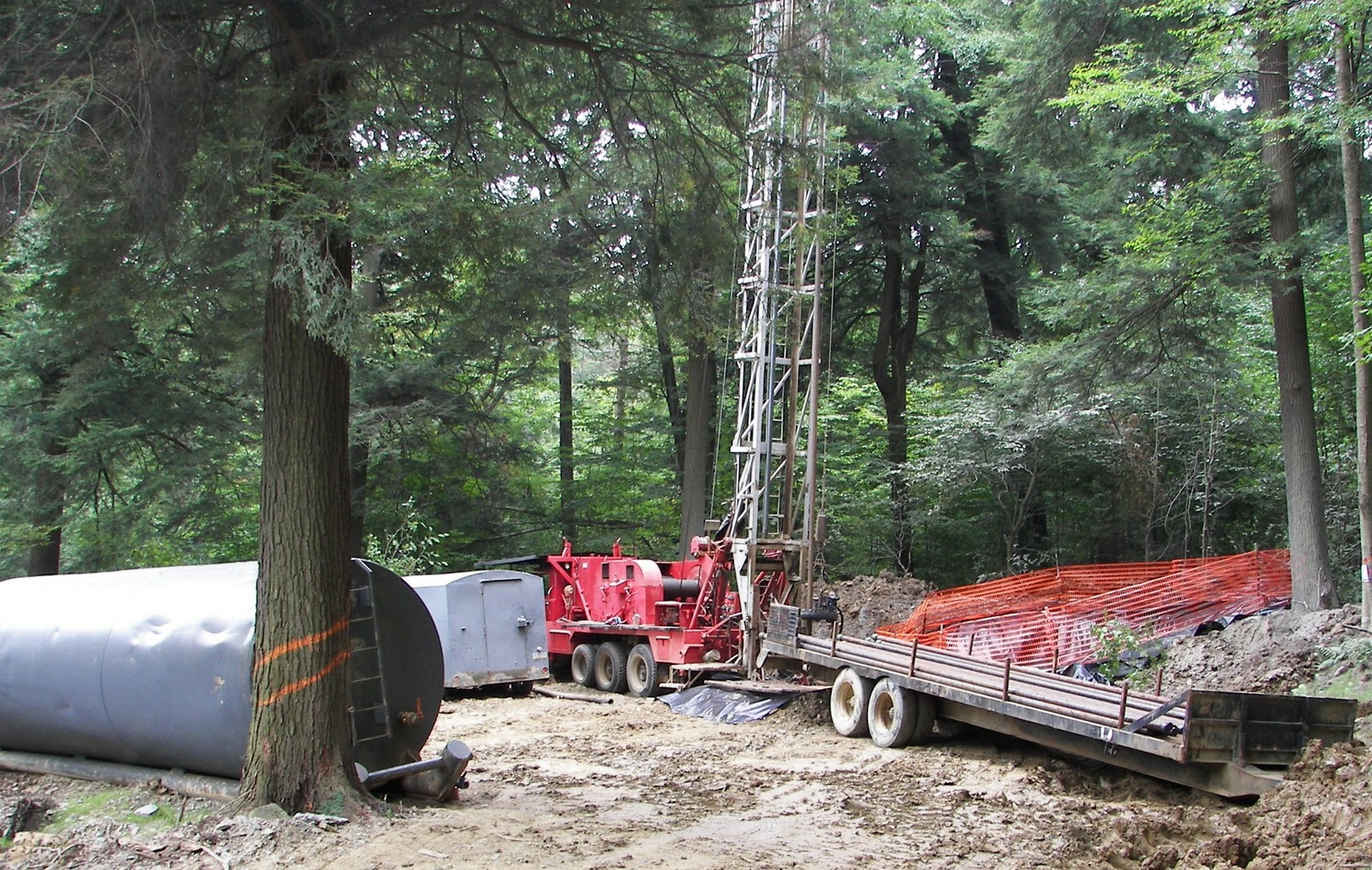
Hunters living next to the Millennium pipeline aren’t too worried about the right-of-way that cuts through the Southern Tier of New York. After all, the nearly 100-foot wide corridor cutting through the woods creates habitat that attracts deer and turkey.

Hunting is big business in NY, bringing in more than $890 million in retail sales each year, says one study. Add lodging, gasoline purchases, restaurant meals and permits and you’re looking at a $1.5 billion contribution to the state’s economy.

How will intensive industrial shale drilling impact NY hunting? For an answer, let’s look south of the border, to Pennsylvania. Already some PA hunters have complained that their favorite spots have been cleared for drilling pads. 

On Nov. 7, Penn State advised sportsmen to be alert for Marcellus activity on public land. Drilling on PA state land increased from 1970 active permits in October 2009 to more than 4500 active this October. That’s more than double.

One problem facing hunters: increased traffic in the forests. There could be new roads and heavy truck traffic near active drill sites. The PA Dept. of Conservation and Natural Resources (DCNR) promised to limit heavy truck traffic this weekend for bear season. Meanwhile, they urge hunters to take precautions when shooting around well sites.

How will hunters know there’s drilling in the area? DCNR says they’ll post active well pads with signs 150 yards from the edge of the pad – that’s three times the setback distance from streams, if you’re keeping score.

While there’s no obvious impact on white tail, some hunters wonder whether intensive drilling might cause declines in deer and game bird populations. Biologists in western states have observed population declines in deer, elk, grouse and Pronghorn.

The biggest factor is the impact of roads. Deer and elk depend on large unbroken stands of spruce and fir to provide shelter from wind and cold as well as cover from predators. Roads slice forests into increasingly smaller fragments, and smaller forests means smaller populations.

Well density is important: while one gas well per square mile had minimal effects on Wyoming’s mule deer populations, sixteen wells per square mile showed a significant effect.

Then there’s the question of food safety. Many hunters count on their deer to stock the freezer. But how safe is venison harvested from areas where intensive industrialized drilling takes place? Some chemicals in frack fluid and drilling wastes can accumulate in tissues, but so far there has been no research on the impact of industrialized drilling on wild food.